It seems no time at all since I was posting with the new releases for March. The months pass by so quickly and here I am, posting about some great new releases for April. Here are ten which have caught my eye. Is there anything that tickles your fancy?
The Maiden by Kate FosterInspired by a real-life case and winner of the Bloody Scotland Pitch Perfect Award, Kate Foster's The Maiden is a remarkable story with a feminist revisionist twist, giving a voice to women otherwise silenced by history.
Edinburgh, October 1679. Lady Christian is arrested and charged with the murder of her lover, James Forrester. News of her imprisonment and subsequent trial is splashed across the broadsides, with headlines that leave little room for doubt: Adulteress. Whore. Murderess.
Only a year before, Lady Christian was newly married, leading a life of privilege and respectability. So, what led her to risk everything for an affair? And does that make her guilty of murder? She wasn't the only woman in Forrester's life, and certainly not the only one who might have had cause to wish him dead...
Foxash by Kate Worsley
Worn out by poverty, Lettie Radley and her miner husband Tommy grasp at the offer of their very own smallholding - part of a Government scheme to put the unemployed back to work on the land. When she comes down to Essex to join him, it's not Tommy who greets her, but their new neighbours. Overbearing and unkempt, Jean and Adam Dell are everything that the smart, spirited, aspirational Lettie can't abide.
As Lettie settles in, she finds an unexpected joy in the rhythms of life on the smallholding. She's hopeful that her past, and the terrible secret Tommy has come to Foxash to escape, are far behind them. But the Dells have their own secrets. And as the seasons change, and a man comes knocking at the gate, the scene is set for a terrible reckoning.
Combining a gothic sensibility with a visceral, unsettling sense of place, Foxash is a deeply original novel of quiet and powerful menace, of the real hardships of rural life, and the myths and folklore that seep into ordinary lives - with surprising consequences.

They say that behind every great man is a hard-working woman. Behind the titanic that was Florence Nightingale, there was a lesser-known sister, Frances Parthenope.
While Florence achieved iconic fame for her work with wounded soldiers in the Crimea, Parthenope spent her days gathering supplies for those same soldiers, especially the ever-needed dry socks, and sending them overseas. With hands badly damaged by rheumatic fever, Parthenope tirelessly penned letters to Florence’s supporters and tactfully requested donations.
Eventually, Parthenope married and turned her writing talents to fiction and non-fiction that exposed Victorian injustices toward the poor and women. Florence Nightingale’s older sister never achieved the fame that came to the “Lady of the Lamp.” However, in her own right, Frances Parthenope Verney was a great Victorian. A novelist, journalist, and activist, she supported her sister’s reform of the medical profession while being a thought influencer on the subject of the urban poor and the British peasantry.

In 1969, two sisters from rural Việt Nam leave their parents' home and travel to the bustling city of Sài Gòn. Soon their lives are swept up in the unstoppable flames of a war that is blazing through their country. They begin working as 'bar girls' in one of the drinking dens frequented by American GIs, forced to accept that survival now might mean compromising the values they once treasured.
Decades later, two men wander through the streets and marketplaces of a very different Sài Gòn: modern, forward-looking, healing. Phong – the son of a Black American soldier and a Vietnamese woman – embarks on a search to find his parents and a way out of Việt Nam, while Dan, a war veteran, hopes that retracing the steps of his youth will ease the PTSD that has plagued him for decades.
When the lives of these unforgettable characters converge, each is forced to reckon with the explosive events of history that still ripple through their lives. Now they must work out what it takes to move forward in this richly poetic saga from Nguyễn Phan Quế Mai at her very best.
The Royal Bastards of Twelfth Century England by James Turner
The many storied monarchs of twelfth century England lived, fought, loved, and died surrounded by their illegitimate relatives. While their many contributions have too often been overlooked, these illegitimate sons, daughters and siblings occupied crucial positions within the edifice of royal authority, serving their legitimate relatives as proxies and lieutenants.
In addition to occupying roles and offices at the centre of royal administration, Anglo-Norman and Angevin royal bastards, exiled to the fringes of family identity by a twist of fate, provided the kings of England with military and political support from amidst the aristocratic affinities into which they were embedded. Rather than merely inert pieces on the dynastic game board or passive conduits of royal association, these men and women were engaged participants in contemporary politics, proactively cultivating and shaping the thrones' relationship with its principal subjects.
This book, the first full length study dedicated to the subject, examines the seminal conflicts and changing shape of the royal dynasty during a period of turbulent and formative development in the nature and institutions royal government through the rarely before accessed perspective of the reigning monarchs' illegitimate family members and deputies.
More than that this study aims, as far as possible, to illuminate and bring to life the lives, triumphs and tragedies of these fascinating half-forgotten personages. The victims of a rapid and profound demographic and social change which drastically recontextualised their position with royal family identity and aristocratic society, the bastards of the English royal family found new methods to survive and thrive.
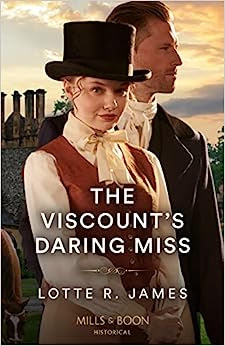
The Viscount's Daring Miss by Lotte R. James
When her best friend and employer is injured, groom Roberta ‘Bobby’ Kingsley feels compelled to help him. She agrees to step into the saddle and compete in an endurance horse race to help secure his ancestral home. Yet the minute Bobby comes face to face with her opponent ― arrogant yet infuriatingly charismatic Lawrence, Viscount Hayes ― it’s clear that it won’t just be the competition that has her heart racing!
The House That Made Us by Alice Cavanagh
When Mac and Marie marry and find a home of their own, Mac takes a snap of them outside their newbuild bungalow, the garden bare and the paint on the front door still wet. It becomes a tradition, this snap, and slowly the photographs build into an album of a fifty-year relationship.
Every year they take a photo and though things change around them – the garden matures, the fashions change, they grow older – the one constant is their love. Every year, come rain, come shine, from the Seventies through the decades, every photo tells the story of their love. But life never travels the path you expect it to, though they know that a life with love is a life lived to the full.
Now, in the present day, the photo album belongs to someone who doesn’t know the people in its pages. As they watch the lives from the past unfold, will the truth of their love story be told…?
Ada's Realm by Sharon Dodua Otoo
WHERE IS ADA? - In a small village in West Africa, in what will one day become Ghana, Ada gives birth again, and again the baby does not live. As she grieves the loss of her child, Portuguese traders become the first white men to arrive in the village, an event that will bear terrible repercussions for Ada and her kin.
WHEN IS ADA? - Centuries later, Ada will become the mathematical genius Ada Lovelace; Ada, a prisoner forced into prostitution in a Nazi concentration camp; and Ada, a young, pregnant Ghanaian woman with a new British passport who arrives in Berlin in 2019 for a fresh start.
WHO IS ADA? - Ada is not one woman, but many, and she is all women - she revolves in orbits, looping from one century and from one place to the next. And so, she experiences the hardship but also the joy of womanhood: she is a victim, she offers resistance, and she fights for her independence.
This long-awaited debut from Sharon Dodua Otoo paints an astonishing picture of femininity, resilience and struggle with deep empathy and humour, with vivid language and infinite imagination.

Finding your way is never a simple journey…
Alice sees the worst in people.
She also sees the best.
She sees a thousand different emotions and knows exactly what everyone around her is feeling.
Every. Single. Day.
But it’s the dark thoughts.
The sadness. The rage.
These are the things she can’t get out of her head. The things that overwhelm her.
Where will the journey to find herself begin?
Living in Early Victorian London by Michael Alpert
London in the 1840s was sprawling and smoke-filled, a city of extreme wealth and abject poverty. Some streets were elegant with brilliantly gas-lit shop windows full of expensive items, while others were narrow, fetid, muddy, and in many cases foul with refuse and human filth. Railways, stations and sidings were devouring whole districts and creating acres of slums or ‘rookeries’ into which the poor of the city were jammed and where crime, disease and prostitution were rife.
The most sensational crime of the epoch, the murder of Patrick O’Connor by Frederick and Maria Manning, filled the press in the summer and autumn of 1849. Michael Alpert uses the trial record of this murder, accompanied by numerous other contemporary sources, among them journalism, diaries and fiction, to show how day-to-day lives, birth, death, sickness, work, shopping, cooking, and buying clothes, were lived in the crowded, noisy capital in the early decades of Victoria’s reign. These sources illustrate how ordinary people lived in London, their incomes, entertainments, religious practice, reading and education, their hopes and anxieties.
Life in Early Victorian London reveals how ordinary people like the Mannings and thousands of others experienced their multifaceted lives in the greatest capital city of the world. Early Victorian London lived on the cusp of great improvements, but it was a city which in some aspects was mediaeval. Its inhabitants enjoyed the benefit of the Penny Post and the omnibus, and they were protected to some extent by a police force. The Mannings fled their crime on the railway, were trapped by the recently-invented telegraph and arrested by ‘detectives’ (a new concept and word), but they were hanged in public as murderers had been for centuries, watched by a baying, drunken and swearing mob.